

Meet the concept of Digital Twins! Originally used in aerospace engineering to figure out the management of air force vehicles, this idea has now emerged into the world of healthcare. It essentially entails constructing a virtual counterpart of an individual with all of his/her biological data. A virtual simulation of the patient’s current health state is made by collecting all of their existing health details such as in medical records, health tracking apps and medical imaging tests, after which it is compared to other existing data on specific clinical pathologies and information on medications, diagnostics and therapies used for other similar patients. By doing this, doctors can predict the prognosis of a disease more efficiently and decide which path of treatment to consider by looking at other social factors affecting the patient too.
This notion holds a lot of potential, not only acting as a complementary resource to doctors, helping them eventually improve human health, but also helping in reducing the risk of certain risky or inappropriate treatment pathways. In today’s world, with the rapid advancement of artificial intelligence and data science, the development of these Digital Twins seems more pragmatic than ever. However, for the practical implementation of DTs, there are 4 important considerations that hospitals should think about:
They must have proper access to digital devices and equipment
Their patients’ data should be collected in a structured manner
There should be ethical considerations about the use of a patient’s data such as the factor of consent and relevant legal implications
Medical practitioners should have access to this digital interface on a daily basis, in which information pertaining to the digital twin is processed
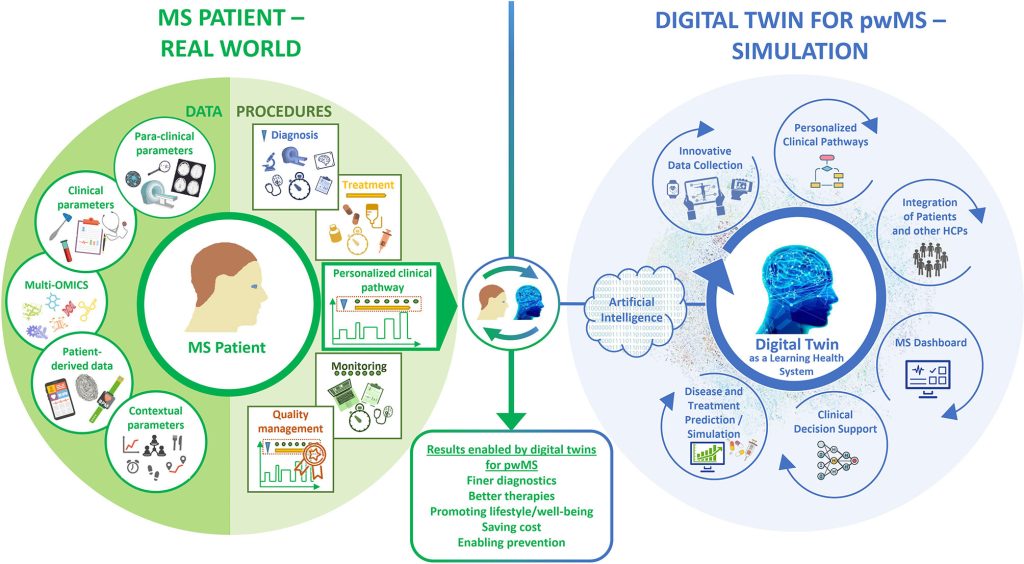
There is a certain extent to which these Digital Twins can be implemented into the sector of healthcare in today’s world. Research is still being conducted to perfect these algorithms to make them suitable for the medical environment, but after their application, it is likely that they will be very advantageous.
Some examples of this have actually been seen in Singapore and Australia. Back in early 2025, a pilot programme was conducted by Singapore General Hospital and Tan Tock Seng Hospital, which used Digital Twin technology to detect and manage chronic kidney disease due to diabetes. The DT software analysed data provided, with the help of AI, to predict the risk of Chronic Kidney Disease onset in diabetes over the last three years. A health technology start-up, called Mesh Bio, developed the world’s first foundational digital twin model of human biology, HealthVecor Diabetes, that used data collected from 7,000 patients in the two hospitals and polyclinics. Data collected, such as fasting blood sugar levels, cholesterol measurements, body mass index, blood pressure etc allowed the technology to predict the risk of CKD development in patients, with type 2 diabetes who had healthy kidneys, in the next three years.
Similarly, in the University of Melbourne, researchers used three large datasets with electronic patient health records to train a large language model (LLM). This model was called DT-GPT and it interpreted data of patients suffering from Alzheimer's disease, non-small cell lung cancer or from those admitted in the intensive care units. This model made predictions about the future of the patient, with the help of information from its pre-existing medical records and history. It was not provided with any information about the health outcome of the patient, so that researchers could evaluate the effectiveness of this technology, which was later on found to make very accurate predictions.
Therefore, the usage of these Digital Twins leads to personalised treatments, customised according to the needs of the patients and what works best for them. As AI becomes more sophisticated and developed, there is a chance of seeing these twins more often in hospitals, with a high possibility of you having your own twin too!


