

During earthquakes, you drop, take cover, and hold on to dear life (or a sturdy table) and hope for the best. But in a place that is prone to earthquakes that can be quite tiring and mentally exhausting, having to fear for your life every time the ground shakes. Therefore, I present to you the best solution mankind has designed so far - earthquake-proof building.
Earthquakes are caused when tectonic plates collide, which sends shockwaves in multiple directions. Buildings are designed to withstand strong winds and other forces acting upon them. However, nothing prepares the buildings to deal with the horizontal forces acting upon the building due to the Earthquake. Since buildings are made using strong yet inflexible concrete, they are knocked down like building blocks when nature decides to have a temper tantrum. This changed when “Father of Seismology”, John Melne, came around and made a significant contribution to earthquake research.
John Melne was a geologist who played a huge role in the study of earthquakes. Using his findings, engineers today can design buildings that can hold out against the most severe earthquakes. In the beginning, engineers used materials such as carbon fibre cloth and bonded steel reinforcement to increase the bearing capacity of the weakest areas of the building (make it stronger). However, this method is not effective alone, as this technique makes the building more rigid, making it no longer flexible.
One method that structural seismic reinforcement can be paired with is base seismic isolation. A very famous application of this mechanism is in the San Francisco City Hall in the United States of America. Base seismic isolation reduces damage to the building by separating it from the ground. The base seismic isolator mainly uses three materials: rubber, lead, and steel. The rubber provides flexibility to the building, which slows down the movement before it reaches the building. The lead core can absorb kinetic energy as heat, which causes the core to deform however, it always reverts to its original shape. The seismic base isolator also uses steel, which is tasked with keeping the building upright and making it stable.

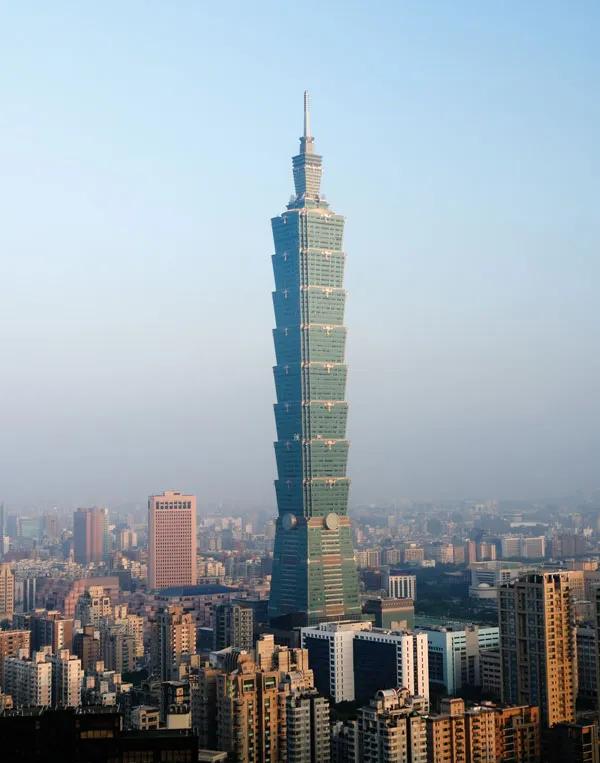
Taipei 101 in Taiwan was famous for being the tallest building in the world from 2004 to 2009. This pagoda-inspired building also happens to be earthquake-resistant. In this building, there is a golden steel sphere that is suspended by 92 cables and weighs 660 tonnes. When an earthquake occurs, the gold sphere has inertia (resistance to motion) due to its heavy mass. Hence, when the building sways to one side, the inertia of the sphere creates a lag in motion, which counteracts the motion of the building.
Despite the techniques discussed above, as well as others not mentioned, it doesn’t make the building 100% earthquake-proof, as the likelihood of the building sustaining no damage depends on the earthquake’s strength and duration. Hence, for your safety, to survive an earthquake, drop, take cover, and hold on to dear life.


